Mapped My Entire Week for 3 Months: The Navigation App That Fixed My Daily Rhythm
Have you ever felt like your day slips away before you even start? I did—until I started tracking how I moved through my week. It wasn’t about working harder, but moving smarter. A simple navigation app, the kind we all have, quietly reshaped my routines, cut down chaos, and gave me back time I didn’t know I was losing. This isn’t about flashy tech—it’s about real life. Let me show you how something as ordinary as a map app became my daily rhythm’s quiet hero.
The Chaos Before the Calm: Life Out of Sync
I used to run late—always. School drop-offs, grocery runs, work meetings—they blurred together in a rush of stress and last-minute detours. My phone’s map app? Just something I opened when lost. I didn’t realize how much time I wasted circling blocks or how often I overbooked because I misjudged travel time. One rainy Tuesday, stuck in traffic on the way to a doctor’s appointment, I realized: my day wasn’t failing because I was lazy. It was failing because I wasn’t planning with reality.
That moment changed everything. I was sitting in my car, rain tapping the windshield, the GPS rerouting me for the third time, and I felt that familiar knot in my stomach—guilt, frustration, helplessness. I wasn’t just late. I was losing control. And the worst part? I kept blaming myself. If only I’d left earlier. If only I’d packed lunches the night before. But the truth was, I *had* left early. I *had* prepped. I just didn’t account for the school zone slowdown, the construction detour, or the fact that the pharmacy’s parking lot fills up by 10:15 a.m. We don’t fail because we’re disorganized—we fail because we plan in a vacuum, not in the real world.
So I made a promise to myself: for the next three months, I wouldn’t guess travel time. I wouldn’t assume. I’d let data guide me. I’d treat my navigation app not as a last resort, but as a daily advisor. I started small—just checking drive times before leaving the house. But soon, that small habit unraveled a bigger truth: my schedule wasn’t the problem. My perception of time and space was.
Turning a Map App into a Daily Planner
Most of us think of navigation apps as tools for directions, not daily design. But I began treating mine differently. Instead of opening it only when driving, I started checking it first thing in the morning—before confirming any plans. I’d input all my day’s stops and let the app calculate total travel time. The shock? My 10-minute errand was actually a 28-minute round trip with traffic. This tiny shift—planning with time, not just intention—changed everything.
I began adjusting my schedule based on real movement data, not wishful thinking. If I had three errands—school drop-off, dry cleaning pickup, and grocery shopping—I’d plug them into the app the night before and see the most efficient order. Sometimes it meant doing the grocery run at 4 p.m. instead of 6, but that saved me 20 minutes and a parking headache. Other times, it meant realizing that two errands were only five minutes apart if I took the back road, not the main avenue.
What surprised me most was how this small act reduced decision fatigue. I wasn’t constantly asking myself, “What should I do next?” The app gave me a sequence that made sense. I wasn’t blindly reacting to my to-do list—I was moving with purpose. And because I could see the full picture, I started saying no to things that didn’t fit. I declined a midday coffee with a friend not because I didn’t want to see her, but because the app showed it would cost me 45 minutes in travel and parking stress. That time was better spent at home, helping my daughter with her science project.
This wasn’t about becoming robotic. It was about becoming realistic. The app didn’t take over my life—it gave me back the ability to choose how I wanted to live it.
Smoother Mornings, One Route at a Time
Mornings used to be frantic. I’d rush my kids, forget lunches, and still leave late. Then I started using my map app the night before. While prepping dinner, I’d check tomorrow’s traffic patterns to my son’s school and my workplace. If there was a backup on the usual route, I’d plan an alternative. I even saved common routes as favorites. The result? We left earlier when needed, avoided last-minute panic, and actually arrived calm.
One Wednesday, the app warned of a major slowdown near the school due to a local parade. I woke up 15 minutes earlier than usual, woke the kids gently, and we took the long way—through the park roads, which were quiet and tree-lined. My son actually ate his breakfast in the car. My daughter finished her book. No yelling. No “Hurry up!” No “Where’s your shoe?” It felt like a miracle.
My daughter once said, “We’re not yelling in the car anymore.” That hit harder than any productivity metric. Peace, not speed, became the real win. And it wasn’t just about avoiding traffic. It was about creating space for kindness, for patience, for connection. I realized that the morning sets the tone for the whole day. When we arrive stressed, we carry that stress into work, into school, into our relationships. But when we arrive calm, everything shifts.
I also started using the app’s “leave now” feature. Instead of guessing when to go, I’d ask the app when to leave to arrive on time. It factored in real-time traffic, weather, even accidents. I didn’t have to be the family’s timekeeper anymore. The app did it for me—and it was never wrong.
Family Time Reclaimed from Traffic Jams
I used to lose an hour weekly just waiting in school pickup lines or circling the block for parking. Then I noticed my app’s “popular times” feature showed exactly when the lot was least crowded. I adjusted our pickup time by 12 minutes—and gained back that hour. Small? Yes. But over months, it added up to extra family dinners, longer walks, and bedtime stories without rushing. My husband noticed. “You’re less tense after work,” he said. The app didn’t just save time—it saved our mood.
One afternoon, I picked up my daughter 15 minutes early. We sat in the car, windows down, listening to her favorite playlist. She told me about her friend’s birthday party, about the math test she aced, about the boy who made her laugh. We didn’t have that kind of conversation when we were rushing. We were too busy surviving the day. But that 15 minutes became our little ritual. No phones. No distractions. Just us.
Navigation wasn’t just about places anymore. It was about protecting moments. I started applying the same logic to weekend plans. Instead of showing up at the mall at noon on Saturday—peak chaos—I checked the app and went at 10 a.m. Fewer crowds, better parking, less stress. I even used it to find quieter walking trails near the lake, avoiding the packed main entrance. The app became my secret weapon for calm.
And the best part? My kids started noticing. My son said, “Mom, we always find parking now.” My daughter asked if we could “use the app to plan our bike ride.” They weren’t just seeing efficiency—they were learning it. They were growing up with the idea that planning isn’t boring. It’s caring.
How Small Detours Led to Big Mental Shifts
The more I relied on the app’s real-time updates, the more I accepted uncertainty. When a road closed, I didn’t panic—I trusted the reroute. That mindset spilled into other areas. I became more flexible, less rigid about plans. I started seeing detours as part of life, not failures. My app didn’t eliminate surprises, but it taught me to adapt without stress. Over time, I became less reactive, more resilient. Technology didn’t just guide my car—it guided my calm.
I remember one afternoon when the highway was shut down due to an accident. In the past, I would have called my husband, stressed, asking what to do. But this time, I just followed the app’s new route. It added 12 minutes, but it was smooth. I turned on a podcast, breathed deeply, and accepted it. When I told my husband later, he said, “You sound different. Calmer.” I realized I wasn’t just managing traffic—I was managing my mindset.
This shift showed up in other ways too. When my daughter’s school event was moved last minute, I didn’t spiral. I opened the app, checked the new location, and adjusted. When my grocery store was out of stock and I had to go to another, I didn’t see it as a disaster. I saw it as a small detour—nothing the app couldn’t handle. I wasn’t resisting life anymore. I was flowing with it.
And that, I’ve learned, is the real gift of technology—not control, but trust. Trust that even when things change, you’ll find your way. Trust that you don’t have to have everything figured out. Trust that help is in your pocket.
Building a Smarter Weekly Flow (Not Just Daily)
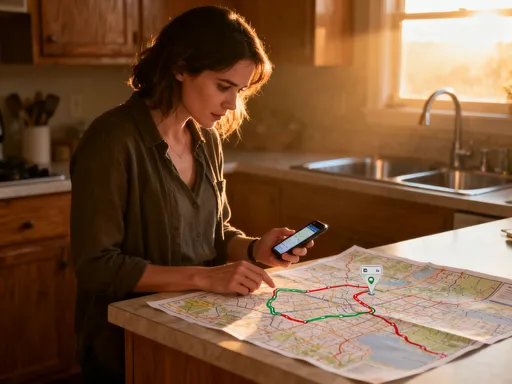
After mastering single days, I zoomed out. I began mapping my entire week every Sunday night. I’d list all recurring stops—grocery, gym, pharmacy—and let the app suggest the most efficient order. I grouped nearby tasks by day and time. I even shared routes with my partner using the app’s collaboration feature. What emerged was a weekly rhythm that felt natural, not forced.
I stopped overloading Mondays and saved energy for weekends. I realized that doing the grocery run on Tuesday instead of Saturday meant fewer crowds and more focus. I scheduled my gym visits when the parking lot was emptiest. I planned my pharmacy pickup on the way home from my son’s soccer practice—same direction, no extra trip. Each decision was small, but together, they created a week that felt lighter, more balanced.
My husband and I started using the app to coordinate. He’d send me his work meeting locations, and I’d see if any overlapped with my route. We began combining trips—both dropping off library books, both picking up prescriptions. We weren’t just saving time. We were creating shared moments. We’d meet at a coffee shop near one of our stops, sit for 15 minutes, and just talk. No agenda. No rush. Just us.
This weekly planning didn’t make my life busier—it made it smoother. I wasn’t chasing time anymore. I was moving with it. And because I could see the whole week laid out, I started protecting downtime like it was sacred. I blocked off Saturday afternoons for no plans at all. And when the app suggested a faster route that would cut into that time, I said no. I wasn’t optimizing for speed. I was optimizing for peace.
The Quiet Power of Ordinary Tech
None of this required new gadgets or premium subscriptions. Just a shift in how I used something already in my pocket. The app didn’t change me—but it revealed patterns I couldn’t see. It turned invisible time wasters into visible opportunities. And in doing so, it gave me something priceless: ease. I’m not faster, but I’m more present. Not perfect, but more peaceful.
This isn’t about tech magic. It’s about using what we have, wisely. And sometimes, the quietest tools make the loudest difference. I still use the app for directions. But now, I also use it for clarity, for calm, for connection. It reminds me that life isn’t about doing more. It’s about moving with intention. It’s about showing up—on time, with love, and with space in your heart.
If you’re feeling overwhelmed, I don’t have a magic solution. But I do have a simple suggestion: open your map app. Not when you’re lost. But when you’re planning. Let it show you the real time it takes to live your life. Then adjust. Protect your time. Protect your peace. Because the most powerful tech isn’t the one that dazzles—it’s the one that helps you breathe.