More Than Alerts: How Smart Safety Tools Help Me Parent with Confidence
Being a parent in today’s world means loving fiercely—and worrying constantly. I used to check my phone every few minutes, wondering if my child was safe on the walk home from school or if they’d wandered too far at the park. Then I discovered smart safety tools that didn’t just track locations, but truly understood our life. They learned routines, alerted me only when it mattered, and gave me something priceless: peace of mind. It wasn’t magic—it was thoughtful technology designed not to add to my stress, but to gently hold space for it, so I could breathe a little deeper, love a little louder, and finally stop counting the minutes until my child walked through the door.
The Constant Hum of Parental Worry
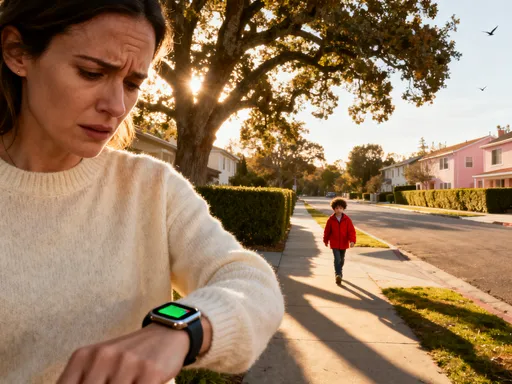
Let’s be honest—motherhood today feels like living with a low-grade hum of anxiety. It’s not just the big things like illness or accidents. It’s the small, daily uncertainties that pile up: Did she cross the street safely? Is he okay walking home with his backpack slung over one shoulder, head down, lost in thought? I remember standing at the kitchen counter, chopping vegetables I never ended up using, eyes locked on a basic location app. Every time the dot on the screen drifted near a busy intersection, my heart would skip. I’d send a quick text: “Where are you?” Then wait. And wait. And worry. That wasn’t parenting. That was panic in disguise.
What I didn’t realize then was that the tool I was using wasn’t helping me—it was making it worse. It gave me data, yes, but no context. No understanding. No filter. It treated every movement like an emergency, and in doing so, turned my phone into a source of stress instead of support. I wasn’t gaining control. I was losing my calm. And that’s when I started asking: What if technology could do better? What if it didn’t just show me where my child was, but actually helped me understand when I needed to care—and when I could just let go?
From Tracking to Truly Understanding
The first generation of safety apps felt like digital leashes—functional, maybe, but cold. You’d open the app, see a blinking dot, and your imagination would run wild. Did they get off the bus early? Are they lost? Did something happen? There was no intelligence behind the data. No memory. No sense of routine. It was like having a security guard who shouts “ALERT!” every time someone opens the front door—even if it’s your child coming home from school, same as every day.
Then I found tools that worked differently. These weren’t just tracking devices. They were learning systems. Over time, they began to recognize patterns—like how my child leaves school at 3:15 p.m., walks past the library, and gets home by 3:40. Or how on Thursdays, they stop at a friend’s house for homework. Once the system learned that rhythm, it stopped bothering me with updates during those normal moments. But if school ends at 3:15 and my child isn’t moving by 3:25? That’s when I get a quiet, calm notification: “Your child hasn’t left school yet. Want to check in?”
This wasn’t about constant surveillance. It was about intelligent awareness. The technology wasn’t replacing my instincts—it was enhancing them. It knew what “normal” looked like for us, so it could quietly flag what wasn’t. And that shift—from raw data to meaningful insight—changed everything. Suddenly, I wasn’t reacting to every blip on the screen. I was responding only when it truly mattered. That’s not just smarter tech. That’s parenting support that respects your time, your mind, and your heart.
Custom Safety That Fits Your Family’s Life
One of the things I love most about today’s smart safety tools is how flexible they are. Because let’s face it—no two families live the same way. My neighbor’s 10-year-old bikes three miles to school alone. Mine still wants me to walk her to the bus stop. And that’s okay. Parenting isn’t about keeping up with anyone else. It’s about knowing your child and meeting them where they are.
That’s why customization made such a difference. I could set different safety rules for different days. On school days, I have a “safe route” mapped from school to home. If she strays too far from it, I get a heads-up. But on weekends, when she’s at a birthday party across town, I can create a temporary safe zone around the venue. Once she’s inside that bubble, I stop getting alerts. It’s like drawing an invisible circle around the fun—and knowing she’s safe inside it.
I also adjusted the sensitivity of alerts. Early on, I had them set high because I was nervous. But as I saw how consistently she followed her routines, I relaxed the settings. Fewer alerts. Less noise. More trust. And then there’s the voice check-in feature—such a game-changer. Instead of me texting “Where are you?” (which can sound suspicious or controlling), she can just say, “Hey, I’m at the library,” into her wearable, and I get a gentle ping. It feels natural. Friendly. Not like an interrogation. These small touches made the technology feel less like monitoring and more like a quiet, supportive presence in our lives.
Real-Time Help Without the Overload
There’s a fine line between being informed and being overwhelmed. I’ve been on both sides of it. In the early days, I had every alert turned on—location updates, zone exits, low battery warnings. My phone buzzed so much I started ignoring it. That’s the opposite of peace of mind. When every notification feels urgent, none of them are.
The tools that truly helped me were the ones designed with emotional intelligence. They don’t bombard me. They filter. They know that my child usually spends an hour at the library after school. So if she’s still there 70 minutes later, it doesn’t panic. But if she’s been there for two and a half hours? That’s unusual. That’s when I get a calm, clear message: “Your child has been at the library longer than usual. Would you like to send a check-in message?”
Sometimes, the app even suggests what to say: “You OK?” or “Need a ride?” With one tap, I can send it. No typing. No overthinking. Just connection. And if she takes an unexpected route—say, cutting through a park instead of walking down the main road—I get a heads-up, not a siren. The notification is calm, informative, and gives me just enough to decide: Should I call? Wait? Trust? That’s the beauty of it. It doesn’t make decisions for me. It just gives me the right information at the right time, so I can parent with clarity instead of fear.
Building Trust, Not Dependence
I’ll admit—I was nervous at first. I didn’t want my child to feel like I was watching her every move. I worried it might damage our trust. But here’s what surprised me: when we talked about it openly, the opposite happened. We sat down together, looked at the app, and I explained how it worked. “It’s not about spying,” I said. “It’s about making sure you’re safe, especially when you’re out on your own. And if something feels off, it helps me check in—so I’m not guessing or worrying in silence.”
We even set the rules together. She helped decide what the safe zones should be. She chose the voice check-in phrases. She picked the watch face for her wearable. Because she was part of the process, it didn’t feel like something I was imposing on her. It felt like a shared safety plan. And over time, as she proved how responsible she was, we adjusted the settings. Fewer alerts. More freedom. The tech didn’t replace our conversations about safety. It gave us a new way to have them.
What I love most is that the alerts have actually decreased. Not because I turned them off—but because she’s consistent. She follows her routines. She checks in when she’s supposed to. The system recognizes that, and so do I. The technology didn’t make her more responsible. But it gave me the confidence to let her grow. And that, to me, is the real win. It’s not about control. It’s about creating a safe space where trust can grow, one small step at a time.
Seamless Integration Into Daily Routines
For any tool to work in real life, it has to fit into the chaos of it. And let’s be real—our days are messy. There’s laundry, meals, work deadlines, school projects, and that one sock that always disappears in the dryer. If a safety tool added more steps, more charging, more setup, I would’ve given up on it fast.
What made this different was how quietly it worked. The app runs in the background—no daily logins, no updates to install, no complicated settings to tweak. The wearable looks like a fun, colorful watch. Her friends think it’s cool. She forgets it’s even a safety device half the time. And charging? Once a week, while she’s brushing her teeth. That’s it. No drama. No extra work.
Alerts come through to my phone or my smartwatch—easy to glance at while I’m stirring soup or helping with homework. I don’t have to stop what I’m doing. I just see it, process it, and move on. And when I don’t get a notification? That’s the best part. I know everything’s fine. The system is working, even when I’m not thinking about it. That’s the kind of technology I can live with—one that supports me without demanding my attention. It’s there when I need it, invisible when I don’t. And that’s how it earns its place in our home.
Peace of Mind That Lasts Beyond the Moment
At the end of the day, this isn’t just about safety. It’s about presence. Before I found these tools, my mind was always half somewhere else—racing through worst-case scenarios, replaying what-ifs, waiting for the next update. I was physically with my child, but mentally, I was miles away, trapped in worry.
Now? I laugh more at dinner. I actually hear the stories she tells me about her day. I’m not distracted, not anxious, not mentally checking the app every five minutes. I’m just here. And that’s changed everything. I’m not a perfect parent. I still forget permission slips and burn the toast. But I’m calmer. More patient. More connected.
These tools didn’t eliminate worry—because love means caring deeply, and that will always come with some fear. But they gave me a filter. A buffer. A way to know when to act and when to relax. And in a world that feels louder and faster every day, that quiet confidence is everything. It’s not about relying on technology. It’s about using it to reclaim the mental space we all need to be the parents—and the people—we want to be. And if that means I can finally stop counting the minutes until the door opens, hear her footsteps, and just smile? Then yes. This small piece of tech has given us something priceless: the gift of peace, one ordinary moment at a time.