Iceland Ring Road Campervan Rental Math Favors Late August Over July Peak
Every summer, thousands of travelers load into campervans and set off on Iceland’s Ring Road, chasing waterfalls, hot springs, and the chance to sleep under the midnight sun. The peak of that wave hits in July, when school holidays and stable weather converge. But if you look at the numbers — rental prices, campsite availability, even daylight hours — the case for shifting your trip to late August is stronger than most guidebooks admit. This isn’t about scraping by on a shoestring. It’s about getting more of what you came for and less of the hassle.
The July Crowd Is Real, But So Is the Price Tag
Campervan rental companies in Reykjavík operate on a simple supply-and-demand curve. July is the steepest part. A standard two-berth campervan that goes for around US$800–1,200 per week in late August can easily cost US$1,200–1,800 in the first three weeks of July. That’s a 30–50% premium for the same vehicle, same insurance, same basic kitchenette. Some smaller operators I spoke with quote even higher spreads when manual-transmission vans are in short supply.
The crowd isn’t just at the rental counter. Campsites along the Ring Road — especially popular ones near Þingvellir, Geysir, and the Jökulsárlón glacier lagoon — often fill by early afternoon in July. Late arrivals end up parking on gravel shoulders or driving an extra hour to the next available site. Kristín Jónsdóttir, a local travel guide based in Akureyri, told me she advises friends to avoid the window between July 15 and August 1 entirely. “It’s not that you can’t have a good time,” she said. “It’s that you spend a lot of time waiting — for a parking spot, for a table, for a shower.”
The Golden Circle, that loop of Þingvellir, Geysir, and Gullfoss, becomes a slow-moving parade of tour buses between 11am and 3pm. You can still see the sights, but the experience is different. Instead of standing alone at a overlook, you’re sharing the railing with sixty other people. Late August doesn’t eliminate that entirely, but the queues shrink noticeably.
Weather Shifts Less Than Brochures Suggest
One of the common fears about traveling in late August is that the weather will turn. The brochures show July as a month of mild sun, and August as the beginning of autumn chill. The reality is less dramatic. Average temperatures in late August hover around 10–14°C, which is nearly identical to July. Rainfall is comparable — around 40–60mm for both months in Reykjavík and along the south coast. The idea that August brings a monsoon-style drop is not supported by the data.
Daylight is where the difference shows, but not as much as you might think. In early July, the sun sets around midnight and rises before 3am, giving nearly 21 hours of usable light. By late August, you lose about four hours: sunset around 9pm, sunrise around 6am. That still leaves 15–17 hours of daylight, which is plenty for a full day of driving, hiking, and sightseeing. The famous midnight sun is gone, but the long twilight — often called the “golden hour” stretched over hours — can make photography even better.
The real cooling comes in September, when averages drop to 8–12°C and rain increases. Late August sits in a sweet spot: the weather is still summer-like for most purposes, but the tourist tide has started to ebb. If you’re worried about cold, bring a thermal layer and a windproof jacket. You’d need those in July too, honestly.
One factor that often surprises travelers is wind. Iceland is windy year-round, but July typically sees slightly calmer conditions, with gusts averaging around 20–30 km/h. In late August, wind speeds can pick up to 30–40 km/h, especially along the south coast. That doesn’t ruin a trip, but it does mean you’ll want to secure your campervan’s awning carefully and avoid parking in exposed areas overnight. The wind also affects hiking: trails at higher elevations may feel significantly colder due to wind chill. Packing a windproof shell is just as important as a rain jacket.
What You Actually Gain in Late August
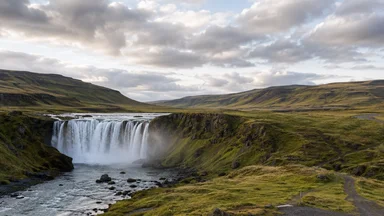
The most tangible gain is space. At popular waterfall stops like Seljalandsfoss and Skógafoss, you’ll have more room on the path and a better chance of a photo without strangers in the frame. At geothermal pools like the Secret Lagoon in Flúðir or the Myvatn Nature Baths, you can soak without elbowing for a spot. The difference is noticeable even at the Blue Lagoon, though that site is perpetually busy regardless of season.
Booking becomes easier, too. Budget campervan classes — the smaller manual-transit vans without a bathroom — often sell out months in advance for July. In late August, you can still find availability three to four weeks ahead, especially if you’re flexible on pickup location. Some rental companies offer late-season discounts for bookings starting after August 20, sometimes shaving another 10–15% off the weekly rate.
Gas stations and supermarkets, which serve as lifelines on the Ring Road, are less crowded. In July, the N1 stations near Vík and Höfn can have lines at the pump and inside the store. In late August, you’ll wait less. And for foragers, there’s a bonus: wild blueberries ripen along the South Coast in late August. Pull over near a heathland patch and you can pick a handful for breakfast — a small pleasure that’s hard to find in July when the berries are still green.
Another subtle advantage is the quality of light. In July, the sun is high and harsh around midday, often creating strong shadows that wash out landscape photos. In late August, the lower sun angle produces softer, warmer light throughout the day, and the extended twilight period — sometimes lasting two hours after sunset — gives photographers a long window of golden tones. If you’re into landscape photography, late August is arguably better than July.
The Cost Breakdown: Rental, Fuel, Camping Fees
Let’s put numbers on it. A typical two-berth campervan from a company like KuKu Campers or Happy Campers costs around US$800–1,200 per week in late August, depending on insurance level and whether you add a rooftop tent. The same van in July runs US$1,200–1,800. That’s a saving of US$400–600, which covers a lot of gas or a couple of nice meals in Reykjavík.
Fuel costs in Iceland are fairly stable year-round, roughly US$7–9 per gallon (about US$1.85–2.40 per liter). A full Ring Road loop is about 1,300 kilometers, and a campervan typically gets 25–30 miles per gallon, so you’ll spend around US$300–400 on gas for the loop. That doesn’t change much between July and August.
Camping fees are the one area where late August might cost slightly more — some sites lower their prices after September 1, not before. But the Camping Card, which covers 28 nights at about 40 campsites, costs roughly US$180 and is valid from mid-May to mid-September. If you plan to camp every night, it pays for itself in about 10 nights. In late August, you’ll have an easier time finding a spot at the card-affiliated sites.
Let’s also consider food costs. Supermarket prices in Iceland are high year-round — a loaf of bread can cost US$4–5, a liter of milk around US$1.50–2.00. But in July, the demand from tourists sometimes drives up prices at smaller grocery stores in rural areas, especially in the Westfjords and East Fjords. In late August, supply chains are more stable, and you’re less likely to encounter empty shelves. I’ve heard from travelers who found the Bonus supermarket in Reykjavík stripped of basic supplies in late July; the same store in late August had full stock.
Three Hidden Drawbacks of Late August
No season is perfect, and late August has its own set of trade-offs. The first is access to the highlands. Many gravel roads in the interior — like the route to Landmannalaugar or the Kjölur route — close by early September, sometimes as early as the last week of August if weather turns. If your dream itinerary involves driving a 4x4 into the interior, July is safer. Late August carries a risk of arriving at a closed gate.
Second, tourist information centers and some smaller museums reduce their hours after August 20. The visitor center at Dyrhólaey, for example, may close at 5pm instead of 7pm. It’s a minor inconvenience, but it means you need to plan your days more carefully. The same goes for some public swimming pools in rural areas, which may shorten hours or close for maintenance in late August.
p>Third, whale watching tours in Húsavík and Akureyri run less frequently. In July, you can often find three or four departures per day. In late August, it might be two, and some operators stop running altogether after August 25. If whale watching is high on your list, check schedules before booking your campervan. But overall, these drawbacks are minor compared to the July bottlenecks of traffic, price, and crowds.There’s also a fourth factor that doesn’t get much attention: the midges. In July, the infamous biting midges around Lake Mývatn can be relentless, especially on still days. By late August, the midge population has declined significantly, and you can enjoy the area without constantly swatting. That alone is a reason for some travelers to shift their dates.
Packing and Planning for Shoulder Season
Packing for late August means preparing for variability. A typical day can start with drizzle and 8°C, clear to sun and 14°C by lunch, then return to wind and rain by evening. Waterproof layers are non-negotiable. A good rain jacket, waterproof pants, and sturdy hiking boots will serve you better than a heavy coat. Thermal base layers and a fleece mid-layer let you adjust as conditions change.
p>Book your campervan at least six weeks ahead, even in late August. The savings disappear if you wait until the last week and find only premium vans left. Most companies allow free cancellation up to 48 hours before pickup, so there’s little risk in reserving early. If you’re flexible, check for relocation deals — sometimes companies need vans moved from Reykjavík to Akureyri and offer deep discounts. p>Cell coverage thins noticeably in the East Fjords and the interior. Download offline maps on Google Maps or Maps.me before you leave Reykjavík. Many campsites have Wi-Fi, but it’s not always reliable. Carry a spare gas canister for your camping stove; supermarkets in small towns sometimes run out of the standard screw-type canisters. And bring a reusable water bottle — Iceland’s tap water is excellent everywhere. p>For a similar analysis on timing your trip to avoid crowds, you might read our piece on Oktoberfest Beer Tent Math, which breaks down why midweek visits save money and hassle. The principle is similar: shift your schedule by a few days or weeks, and the experience changes dramatically. h2>Final Math: When to Book and What to SkipIf your only available window is June through August, the math points clearly to late August. You get 90% of the daylight, essentially the same average temperatures, and a much lower price tag. The savings on campervan rental alone can fund an extra week of travel or a splurge on a glacier hike or a nice dinner in Reykjavík. The crowds are thinner, the campsites easier to navigate, and the overall pace more relaxed.
p>There are two scenarios where July still makes sense. One is if you need guaranteed access to the highland interior with a 4x4. The other is if your travel dates are fixed by school or work schedules, and you can’t shift. In those cases, go in July — but skip the Golden Circle between 11am and 3pm, book your campervan as early as possible, and use the Camping Card app to find last-minute campsite availability. The app shows real-time capacity at many sites and can save you from driving in circles. p>For travelers who can choose, late August offers a better balance of value and experience. The brochures will tell you July is the peak season for a reason. But the brochures don’t have to pay the rental bill or wait in line for a shower. The people who live here year-round — the guides, the campsite operators, the gas station attendants — often take their own vacations in September, after the crowds thin. That tells you something. p>If you’re weighing similar timing trade-offs for another trip, our analysis of Kenya Safari Bag Limit Math might help you rethink what you pack. And for a completely different seasonal strategy, read about Santorini Easter Ferry Deck Math, where a midweek arrival transforms the experience. The underlying lesson is the same: the calendar is a tool, not a cage.