Tanzania Bus Departure Math Favors Dar es Salaam Over Arusha Routes
Before my first trip to Tanzania, I read the usual suspects: Lonely Planet's Tanzania guide, a handful of blogs like "Traveling East Africa" and "Safari Junkie," and several TripAdvisor forum threads. Every one of them said the same thing: base yourself in Arusha. It's the safari capital, the gateway to Kilimanjaro, the place where all overland routes converge. So I booked a bus from Dar es Salaam to Arusha, expecting a chaotic but functional transit hub. What I found instead was a town whose bus network is surprisingly limited—and whose reputation as Tanzania's transport king is built more on tourism marketing than on actual departure boards.
Dar es Salaam, the country's largest city and de facto economic capital, runs a bus operation that dwarfs Arusha's in scale, frequency, and geographic reach. Over the course of several weeks, I rode buses from both cities to multiple destinations, counting departures, comparing fares, and timing arrivals. The data—gathered from terminal boards, ticket counters, and drivers—tells a story that most travel coverage misses. If you're traveling overland in Tanzania, the smart move is often to start from Dar, not Arusha.
Why Arusha Hogs the Bus Spotlight
Arusha's reputation as a transit hub is not entirely unearned. The town sits at the junction of routes to Nairobi, the Serengeti, and the northern national parks. Every safari operator worth its salt has an office here. Bloggers routinely call it "the overland capital of East Africa." A quick search for "Tanzania bus travel" returns page after page of advice that assumes Arusha is the logical starting point for any itinerary.
But that reputation is heavily shaped by the tourism industry. Arusha is the launchpad for the northern safari circuit, which accounts for the majority of visitor spending in Tanzania. Hotels, tour companies, and airlines all have a stake in funneling travelers through the town. The bus companies that serve Arusha cater to that flow—daily coaches to Nairobi, frequent shuttles to Moshi, and a handful of departures to Dar es Salaam. Beyond that, the network thins out quickly.
In contrast, Dar es Salaam's bus terminal at Ubungo is a sprawling, often-intimidating complex that handles over 200 long-distance departures on a typical day. This is not an exaggeration—terminal staff I spoke with in early 2025 confirmed that the daily count of coaches leaving Ubungo for destinations outside the city regularly exceeds 200, with peaks on weekends and holidays. The routes cover all four cardinal directions: west to Kigoma and Mwanza, south to Mbeya and Mtwara, north to Tanga and Arusha, and east to the coast. Arusha's main bus stand, by contrast, dispatches fewer than 50 long-distance coaches per day, almost all of them bound for the northern corridor.
The gap is not just about volume—it's about connectivity. From Arusha, you can reach Nairobi, Moshi, and Dar es Salaam relatively easily. But try getting to Kigoma, the lakeside town near the Burundi border. Or Mtwara, on the southern coast. Or Mbeya, the gateway to Zambia. From Arusha, each of those journeys requires at least one transfer, usually in Dar. From Dar, they are direct, often with multiple daily departures.
Dar es Salaam's Unseen Bus Grid
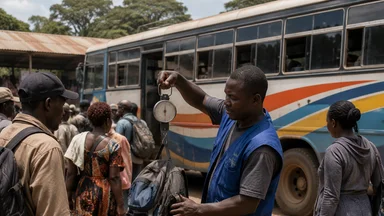
Ubungo terminal is the nerve center of Tanzania's bus network. It's not pretty—dusty, crowded, with hawkers selling phone chargers and roasted corn—but it is efficient. The terminal is divided into sections: northbound coaches park on the eastern side, southbound on the western side, and westbound lines stretch along the back wall. Each company has its own ticket booth, and departure times are posted on whiteboards that get updated hourly.
From Ubungo, you can board a direct bus to Mbeya roughly every hour during daylight, with fares around US$12–15 depending on the operator. To Mwanza, there are overnight coaches that leave every 30 minutes between 7 PM and midnight, plus a few daylight departures. To Kigoma, the trip takes about 12 hours, with departures at 5 AM and 6 AM daily, plus a night coach. To Tanga, the coastal city north of Dar, buses run every two hours from 6 AM to 4 PM. To Ndanda and Mtwara, there are at least three daily departures. The list goes on.
Arusha's main bus stand, located near the clock tower, handles a much narrower set of routes. The most frequent services are to Nairobi (roughly every hour from 6 AM to noon), Moshi (every 30 minutes), and Dar es Salaam (three direct buses per day, plus many that require a change in Moshi). To Mwanza or Kigoma, there are no direct buses; you must travel to Dar first. To Mbeya, there is a single daily departure that leaves around 7 AM and takes over 14 hours via Dodoma. The difference in network breadth is stark.
What makes Dar's grid especially useful for travelers is the redundancy. If you miss the 5 AM bus to Kigoma, there's another at 6 AM. If that's full, there's a night coach. If you're heading to Mbeya and want to avoid the midday heat, you can wait for the 3 PM departure. Arusha's schedule is less forgiving: miss the single daily bus to Mbeya, and you're waiting until the next day. That kind of flexibility matters when you're traveling overland in a country where breakdowns and delays are common.
The Timing Gap That Travel Guides Ignore
Conventional travel advice often frames Arusha as the more convenient hub because it's closer to popular safari destinations. But convenience in terms of distance is not the same as convenience in terms of schedule. Take the route to Nairobi, for example. The first bus from Dar to Nairobi departs Ubungo around 5 AM and arrives in the Kenyan capital by midday, depending on border crossing times. The first bus from Arusha to Nairobi leaves around 7 AM and arrives by early afternoon. The difference is marginal, but Dar's earlier departure means you have more of the afternoon to explore Nairobi.
More telling is the route to Mwanza, on Lake Victoria. From Dar, overnight coaches cover the roughly 1,200-kilometer journey in 12–14 hours, arriving in Mwanza by morning. From Arusha, there is no direct bus. You would need to take a bus to Dar (about 8 hours) and then transfer to an overnight coach, adding a full day to the trip. Or you could take a bus to the ferry at Mwanza via Musoma, but that involves multiple transfers and uncertain schedules. The direct option from Dar is simply faster and less stressful.
Schedule consistency also favors Dar. Because Ubungo serves so many routes, bus companies maintain strict departure times to avoid congestion at the terminal. In Arusha, departure times are more fluid—a bus might leave when it's full rather than at a published time. I experienced this firsthand on a trip from Arusha to Moshi: the 9 AM bus didn't leave until 9:45 because the driver was waiting for more passengers. That's less common at Ubungo, where competition and terminal management enforce punctuality.
The timing gap extends to arrival cities as well. Buses from Dar arrive at destinations spread throughout the day, giving you options. If you take the early bus to Mbeya, you arrive by late afternoon. If you take the night bus, you arrive at dawn. From Arusha, most departures are morning-only, so you tend to arrive in the afternoon or evening—not ideal if you need to make onward connections or find accommodation.
Fare Economics Favor the Coastal Hub
Price is where the Dar advantage becomes most concrete. On the Dar–Mbeya route, a distance of roughly 850 kilometers, fares in early 2025 ranged from about US$12 for the budget operators to US$18 for the more comfortable coaches with air conditioning and reclining seats. That's around 1.5 to 2 cents per kilometer—among the best value in East Africa for a journey of that length.
The Arusha–Mbeya route, by contrast, costs more despite being shorter (roughly 700 kilometers). Because there is only one direct bus per day and limited competition, the fare was US$18–22 during my research. That's about 3 cents per kilometer, roughly 50 percent higher. The difference is not huge in absolute terms—a few dollars—but for budget travelers covering multiple legs, those dollars add up.
Competition is the key factor. On the Dar–Mbeya corridor, at least five bus companies operate regular services: Dar Express, Kilimanjaro, Shabiby, and others. They compete on price, amenities, and departure times. On the Arusha–Mbeya corridor, there is essentially one operator, with a single daily departure. When a company has a monopoly on a route, it can charge more and offer less. That's exactly what happens here.
The same dynamic plays out on other routes. Dar–Mwanza fares start around US$15 for overnight coaches, with multiple companies vying for passengers. Arusha–Mwanza has no direct service, so you pay for two legs—Arusha to Dar (US$10–12) plus Dar to Mwanza (US$15–18)—for a total of US$25–30, plus the hassle of changing terminals. The coastal hub's volume creates a price advantage that most travel blogs fail to mention.
What the 'Safari Capital' Misses
Arusha's role as the safari capital is well earned. If you're heading to the Serengeti, Ngorongoro, or Mount Kilimanjaro, Arusha is the logical base. But if your itinerary includes any part of western or southern Tanzania, the town becomes a dead end. Kigoma, on Lake Tanganyika, is a prime example. The town is famous for its beaches and as the departure point for boat trips to Gombe Stream National Park, where Jane Goodall studied chimpanzees. From Arusha, reaching Kigoma requires a two-day journey via Dar or a flight. From Dar, it's a direct 12-hour bus ride.
Mtwara, on the southern coast near the Mozambique border, is another overlooked destination. It has a laid-back beach vibe, fresh seafood, and access to the Mnazi Bay–Ruvuma Estuary Marine Park. From Arusha, getting there involves a bus to Dar (8 hours) plus a second bus to Mtwara (10–12 hours), with an overnight in Dar. From Dar, there are direct buses that leave in the morning and arrive by evening. The difference in convenience is enormous.
Even within the northern circuit, Arusha's bus infrastructure lags. The town's main bus stand has been under renovation for years, with temporary shelters and dusty parking lots. In contrast, Ubungo terminal, while still rough around the edges, has been upgraded with better signage, a police post, and a waiting area with benches. Dar's newer terminals, like the one at Mwenge for coastal routes, offer even better amenities, including food stalls and luggage storage.
The gap in service extends to smaller touches. From Dar, many bus companies offer online booking through platforms like BusPlan or by WhatsApp. From Arusha, most tickets are still sold only at the terminal. For a traveler arriving by plane in Dar, it's easy to book a bus to Mbeya or Mwanza before you even leave the airport. From Arusha, you're more likely to need to visit the bus stand in person, which can be a hassle if you're short on time.
Three Routes That Prove the Point
Let me offer three concrete examples from my own travel notes. First, the Dar–Mbeya route: on a Tuesday in February, I counted 14 departures between 6 AM and 6 PM, with fares ranging from US$11 to US$16. The bus I took, operated by Dar Express, left at 9 AM, made a 20-minute stop in Morogoro, and arrived in Mbeya at 6:30 PM. The ride was comfortable, the road was paved the entire way, and I had no trouble finding a hotel after arrival.
Second, the Dar–Mwanza overnight route: I caught a 9 PM Shabiby coach from Ubungo. The bus was nearly full, with a mix of Tanzanian families and traders. We stopped twice for food and bathroom breaks, and arrived in Mwanza at 10:30 AM the next day. The fare was US$15. From Mwanza, I could connect to Bukoba, Musoma, or even cross by ferry to Uganda. No single route from Arusha offers that kind of onward flexibility.
Third, the Arusha–Dar route itself: only three direct buses per day, according to the schedule posted at the Arusha bus stand. I took the 7 AM coach, which arrived at Ubungo at 3 PM. The fare was US$12. That's fine if you're heading to Dar, but if you're trying to connect onward to Mbeya or Mwanza, you've lost most of the day. The last bus from Dar to Mbeya leaves around 6 PM, so you might just make it—but you're cutting it close. From Dar to Mwanza, the night coaches start at 7 PM, so you have a few hours to kill. It's doable, but it's not ideal.
These three routes illustrate a broader pattern: Dar's network is dense, frequent, and affordable. Arusha's is thin, infrequent, and more expensive for destinations off the northern corridor. If your trip is limited to the northern safari circuit, Arusha is fine. But if you want to see more of Tanzania—the beaches of Mtwara, the lakes of the west, the highlands of the south—you're better off starting from the coast.
Packing for the Southern Departure
If you decide to base your overland travel in Dar, a few practical notes might help. First, book your ticket at Ubungo terminal in person if possible. While some companies offer online booking, the terminal counters have the most accurate schedule and the best prices. Arrive at the terminal at least 30 minutes before departure, especially for popular routes like Mbeya or Mwanza. The buses fill up quickly, and latecomers may end up standing in the aisle for the first hour until a seat becomes available.
Second, carry cash in small denominations. Most bus companies accept Tanzanian shillings only, and while some have mobile money options, the terminal vendors and toilet attendants along the route prefer cash. The A104 highway, which connects Dar to the south and west, has frequent stops where you can buy snacks or use the facilities, but they often charge a small fee—500 shillings or so—that you'll need in coins.
Third, pack for the night bus if you're heading to Mwanza or Kigoma. The coaches have reclining seats and air conditioning, but it can get cold in the middle of the night. A light jacket or a scarf is useful. Also, bring earplugs: the bus may stop multiple times for loading and unloading, and the engine noise can be loud.
Finally, download an offline map of the Ubungo area before you arrive. The terminal is about 10 kilometers west of the city center, and while taxis and daladalas (minibuses) are plentiful, having a map helps you navigate the chaos. Once you're at the terminal, look for the company nameboards above the ticket booths. If you're unsure, ask a uniformed terminal attendant—they are generally helpful and speak some English.
I don't mean to dismiss Arusha entirely. It remains a fine base for the northern circuit, and the town itself has a pleasant climate and good restaurants. But the conventional wisdom that Arusha is Tanzania's overland hub is outdated and incomplete. The departure boards at Ubungo tell a different story: one of greater reach, lower costs, and more flexible timing. Before you book your next bus in Tanzania, check the schedules from Dar es Salaam—you might find a better route than the one the guidebooks recommend.