Nepal Rupee Exchange Spread Favors Pokhara ATMs Over Kathmandu Airport Desks
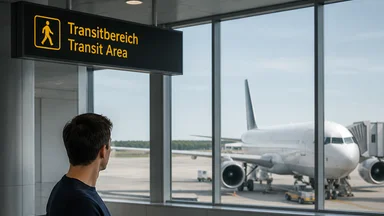
Landing at Kathmandu's Tribhuvan International Airport, the first thing many travelers see after customs is a row of currency exchange desks. The rates look similar at a glance, but the spread—the difference between the buying and selling price—is often 5 to 10 percent below the mid-market rate you see on XE.com or Google. For a traveler exchanging $500, that might mean losing up to $50—the equivalent of a decent meal in a Pokhara restaurant. For someone changing $2,000, it can amount to $200, a significant chunk of their daily budget. The convenience of exchanging at the airport comes at a real cost, and it's one that many visitors don't realize until they compare receipts later.
This article explains why airport desks in Kathmandu are a poor choice, how ATMs in Pokhara offer a better deal, and what the Nepal rupee's peg to the Indian rupee means for your wallet. It's not about finding the absolute best rate—that rarely exists—but about avoiding the worst ones. The advice here is based on common practices and published bank rates, not on a single traveler's anecdote. If you're planning a trip to Nepal, understanding currency exchange before you arrive can save you time and money.
The Airport Trap: Why Kathmandu's Currency Desks Cost You
The exchange desks at Kathmandu airport are operated by private companies and some banks, but they all operate under Nepal Rastra Bank's daily fixing rate, which sets a band within which rates can fluctuate. However, the desks at the airport consistently offer rates at the lower end of that band, and they often add a commission that is buried in the quoted rate rather than stated separately. A traveler exchanging US dollars might see a rate of, say, 130 NPR per USD, while the mid-market rate on the same day is around 135 NPR. That 5-rupee difference represents a spread of roughly 3.7 percent, but it can be wider for less common currencies like Australian or Canadian dollars, sometimes reaching 8–10 percent.
Why do airport desks get away with this? Because they rely on convenience and lack of competition. Travelers arriving after a long flight, often tired and unfamiliar with local rates, are unlikely to shop around. The desks know this and price accordingly. Some desks also have minimum exchange amounts or charge a flat fee that further erodes the effective rate for small transactions. For a traveler exchanging NPR 20,000 (roughly $150), a 5 percent spread means losing about $7.50—not a fortune, but enough for a few cups of tea or a short taxi ride.
Another factor is that the airport desks are not required to display their rates as clearly as banks or ATMs. The rate board might show a single number, but the actual rate applied can vary based on the amount and the currency. Some travelers report being quoted one rate and then receiving a different one when the transaction is processed. While this is not universal, it's common enough that the airport desks have a reputation among repeat visitors as a place to avoid unless absolutely necessary.
There is a counter-argument: if you need cash immediately for a taxi or a meal, the airport desk is the only option. But even then, exchanging a minimal amount—say, $20—and then using an ATM later is a better strategy. The loss on a small exchange is negligible, and it buys you time to find a better rate elsewhere. The key is to avoid exchanging large sums at the airport. The cost of convenience is simply too high.
Pokhara's ATMs: A Better Spread, But Watch the Fees
Once you leave Kathmandu and head to Pokhara, the currency exchange landscape changes. Pokhara is a tourist hub, but its ATMs—particularly those of local banks like NMB Bank and NIC Asia Bank—offer rates within 1 to 2 percent of the mid-market rate. This is a significant improvement over the airport desks. The reason is that ATMs use the Visa or Mastercard exchange rate, which is typically close to the wholesale market rate, plus a small markup that varies by bank. For most travelers, this means getting roughly 98 to 99 percent of the mid-market rate, minus any foreign transaction fees from their home bank.
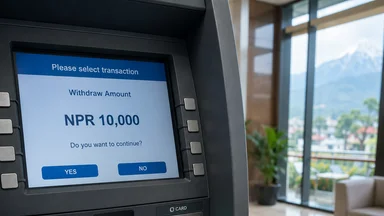
However, there are pitfalls. Many ATMs in Nepal charge a flat fee per withdrawal, typically NPR 500 to 700 (roughly $4 to $5). Some banks, like Everest Bank, are known for offering poor exchange rates on top of that fee, effectively giving you a spread of 4 to 5 percent. Avoiding Everest Bank ATMs is a common piece of advice among expats and frequent travelers. Instead, look for NMB, NIC Asia, or Nepal Bank ATMs, which tend to have better rates and lower fees. The difference can be substantial: withdrawing NPR 25,000 from an Everest Bank ATM might cost you an extra NPR 1,000 compared to an NMB ATM.
Another consideration is daily withdrawal limits. Most ATMs in Nepal cap withdrawals at NPR 25,000 to 50,000 per transaction, though you can often make multiple withdrawals in a day. However, each withdrawal incurs a fee, so it's more cost-effective to withdraw larger amounts less frequently. If your home bank reimburses ATM fees, this is less of a concern. But for those who pay per withdrawal, the math favors taking out the maximum allowed in one go. Some ATMs also have a lower limit for international cards, so it's worth checking the screen before inserting your card.
Foreign transaction fees from your home bank can add another 1 to 3 percent. For example, a US-based card might charge a 3 percent foreign transaction fee on top of the ATM fee. Combined, that can bring the total cost to 4 to 5 percent, which is still better than the airport desk's 5 to 10 percent. The best strategy is to use a card that waives foreign transaction fees and reimburses ATM fees, such as the Chase Sapphire Reserve or similar travel cards. As noted in a travel industry analysis, using the right card can save hundreds of dollars on a trip.
One more tip: always decline the ATM's dynamic currency conversion (DCC) offer. When prompted to accept the transaction in your home currency, say no. DCC rates are notoriously poor and can add 3 to 5 percent to the cost. Let the ATM process the transaction in NPR, and your home bank will convert it at its own rate, which is almost always better.
How the Rupee's Peg to the Indian Rupee Shapes Spreads
The Nepal rupee has been pegged to the Indian rupee at a rate of 1.6 NPR per INR since 1993. This peg means that the Nepal rupee's value moves in lockstep with the Indian rupee, which is itself managed by the Reserve Bank of India. For travelers, this peg limits volatility—the Nepal rupee doesn't swing wildly against major currencies—but it doesn't prevent banks from charging wide margins. The peg is a fixed reference, but exchange desks and ATMs are free to set their own buy-sell spreads within the daily band set by Nepal Rastra Bank.
Understanding the peg can help you spot bad rates. If you see an exchange desk offering a rate that implies a different INR-NPR ratio than 1.6, something is off. For instance, if the INR-NPR rate is 1.6, and the USD-INR rate is 85, then the fair USD-NPR rate should be around 136 (85 × 1.6). If a desk offers 130 NPR per USD, that's a sign they are taking a large spread. Some desks in border towns like Kakarbhitta or Sunauli even accept Indian rupees directly, and the peg means you can use INR in many places, though you might get a poor exchange rate if you try to use them in Kathmandu.
The peg also affects the availability of Indian rupees in Nepal. Many tourists from India travel to Nepal and use INR freely, but for non-Indian travelers, it's usually better to use NPR. Some exchange desks try to offload INR to unsuspecting tourists, claiming it's the same as NPR. It's not. While INR is widely accepted in Nepal, especially in border areas, you'll often get change in NPR, and the exchange rate at the point of sale may not be favorable. Stick to NPR unless you are crossing into India.
For travelers coming from India, the peg means you can exchange INR at a fixed rate of 1.6 NPR per INR at most banks and ATMs. However, some exchange desks in tourist areas may offer less, so it's worth checking. ATMs in Nepal that accept Indian cards often give the peg rate, but they may charge a fee. Overall, the peg provides stability but not necessarily fairness—it's up to the traveler to choose where to exchange.
Comparing ATMs vs. Exchange Desks: The Real Numbers
To put the difference in concrete terms, consider a traveler withdrawing NPR 50,000 (roughly $370) using an ATM in Pokhara versus exchanging the same amount at a Kathmandu airport desk. At the airport, a 7 percent spread means receiving NPR 46,500 worth of rupees after the spread—a loss of NPR 3,500 (about $26). At a Pokhara ATM with a 1.5 percent spread and a NPR 500 fee, the total cost is NPR 1,250 (NPR 750 in spread plus NPR 500 fee), a loss of about $9. The ATM saves roughly $17, which is a significant amount for a budget traveler.
These numbers are illustrative and based on typical rates as of mid-2026. Actual rates vary daily, and your home bank's fees can change the calculation. But the pattern is consistent: ATMs beat exchange desks on pure rate, and the gap is widest at the airport. Some exchange desks in Thamel, Kathmandu's tourist district, offer better rates than the airport, but they are still typically 3 to 5 percent below mid-market. The only exception is if you have a bank account in Nepal or use a service like Wise (formerly TransferWise), which offers near-mid-market rates but requires an online transfer and may not be instant.
Another factor is safety. Carrying large amounts of cash from an exchange desk makes you a target for theft. ATMs are generally safer, especially if you use machines inside bank branches or well-lit areas. Pokhara's lakeside area has several ATMs that are safe to use during the day. Withdrawing smaller amounts more frequently also reduces risk. However, some travelers prefer the certainty of an exchange desk, where you receive a fixed amount of cash without worrying about card skimming or machine failures. The trade-off is cost versus convenience and security.
Practical Steps: What to Do Before You Arrive and After
Before you leave for Nepal, check the current mid-market rate on XE.com or Google and note the spread at your home bank for foreign ATM withdrawals. If your bank charges a flat fee per transaction, consider withdrawing a larger amount less often. If you have a travel rewards card that waives fees, bring that as your primary ATM card. Also, notify your bank of your travel dates to avoid your card being blocked. Some travelers carry a small amount of US dollars or euros as a backup, but exchange them only if necessary.
Upon arrival at Kathmandu airport, exchange just enough for a taxi and a meal—say NPR 5,000 (about $37). Use the remaining cash from your home country for emergencies. Then, once you reach your hotel, find an ATM from NMB or NIC Asia. In Pokhara, ATMs are plentiful along Lakeside Road. Avoid Everest Bank ATMs and any machine that offers dynamic currency conversion. If you need to exchange cash, use a bank counter rather than a private exchange desk. Banks in Nepal are generally reliable and offer better rates than private operators.
For longer stays, consider opening a local bank account if you are eligible, though this is usually only practical for expats or long-term travelers. Some digital banks like Wise offer multi-currency accounts with a Nepal rupee balance, but as of 2026, Wise does not issue a Nepal-specific debit card, so you would still need to withdraw from ATMs. The simplest strategy is to use a combination of a low-fee ATM card and a small amount of cash exchanged at a bank in Thamel or Pokhara.
Finally, keep track of your exchange rates and fees. A simple spreadsheet or note on your phone can help you compare. If you find a particularly good or bad rate, share it with other travelers on forums like Lonely Planet's Thorn Tree or Reddit's r/Nepal. This collective knowledge helps everyone avoid the worst traps. For more practical travel advice, see our article on California Hostel Math or Turkey E-Visa Nationality Denials.
Trade-offs and Final Considerations
While ATMs generally offer better rates, they are not without drawbacks. The most obvious is the flat fee per withdrawal, which can eat into savings if you make many small withdrawals. For example, withdrawing NPR 10,000 five times costs NPR 2,500 in fees (at NPR 500 each), whereas one withdrawal of NPR 50,000 costs only NPR 500. So planning ahead to minimize the number of withdrawals is key. Additionally, some travelers report that ATMs in Pokhara occasionally run out of cash during peak tourist seasons, forcing them to use less favorable options. In such cases, carrying a backup stash of US dollars and exchanging them at a bank counter in Pokhara can be a prudent fallback.
Another trade-off is the risk of card skimming or machine failure. While rare, these incidents do occur. Using ATMs inside bank branches during business hours reduces this risk. In contrast, exchange desks at the airport are staffed and provide a receipt, which some travelers find reassuring. However, the cost difference is so large that the risk is often worth it. For those who are particularly risk-averse, using a bank counter in Thamel (which offers rates only slightly worse than ATMs) may be a middle ground.
There is also the question of convenience. ATMs are available 24/7, while exchange desks have limited hours. If you arrive late at night, the airport desk may be closed, leaving you with no choice but to use an ATM at the airport. The airport has a few ATMs, but they are operated by banks like Everest Bank, which have poor rates. In that case, it's better to withdraw a small amount from the airport ATM and then use a better ATM later. The key is to avoid large transactions at unfavorable locations.
Finally, consider the impact of your home country's banking regulations. Some countries, like India, have strict limits on foreign currency withdrawals, which may affect how much you can take out. Travelers from India should note that while INR is widely accepted in Nepal, using an ATM to withdraw NPR directly may be more cost-effective than carrying large amounts of INR and exchanging them at a desk. The peg ensures a fair rate at ATMs, but exchange desks may offer less.
The Bottom Line: ATMs Win, But Plan Ahead
The conclusion is straightforward: for most travelers, using ATMs in Pokhara (or elsewhere outside the airport) is cheaper than exchanging cash at Kathmandu airport desks. The spread at airport desks is simply too wide, and the convenience does not justify the cost. However, this advice comes with caveats. If your home bank charges high foreign transaction fees, the advantage of ATMs shrinks. If you are uncomfortable using ATMs in a foreign country, a bank exchange counter in Thamel is a reasonable alternative. The key is to avoid the airport desks unless you have no other choice.
There is no single best method that works for everyone. A traveler with a fee-free card and a high withdrawal limit will benefit most from ATMs. A traveler who prefers cash and is willing to shop around might find a decent rate at a private exchange desk in Pokhara. The important thing is to be aware of the spread and to plan your currency strategy before you arrive. A few minutes of research can save you the equivalent of a night's accommodation or a day's meals.
Nepal is a beautiful country with friendly people and stunning landscapes. Don't let a poor currency exchange decision sour your trip. By following the advice in this article, you can keep more of your money for what matters: the experiences, the food, and the memories. For more on travel logistics, check out our guide on Japan Visa Category Math for self-employed travelers.